Sahara Dust in Cape Coral: What It Is and How to Clean It Off Safely
Saharan Air Layer dust settles on Cape Coral roofs, solar panels, and lanais each summer. Why soft wash is the only safe removal method.
You know how that unmistakable reddish-brown film seems to coat everything just as the heavy summer humidity sets in? From what I have seen, that mid-summer arrival marks the start of the most aggressive weathering cycle for exterior surfaces.
Let’s look at the data, what it is actually telling us, and explore a few practical ways to respond.
If you are searching about sahara dust florida cleaning in Cape Coral or the wider Southwest Florida area, you need answers fast.
Homeowners spotting this settling dust after a summer event need to know how to clean it without stripping the protective layers off their materials.
Our team has handled these precise seasonal cycles across Cape Coral, Fort Myers, Naples, Bonita Springs, Estero, Punta Gorda, Sanibel, Captiva, and Babcock Ranch for over 20 years. Experience dictates that using EPA-compliant chemistry and ARMA-aligned techniques is the only safe path forward.
What Actually Matters
Most Cape Coral homeowners get the same handful of questions when they look into sahara dust florida cleaning, and timing is the most critical factor. Scheduling a wash within two to four weeks of a major dust event prevents the particulate matter from permanently bonding to your exterior.
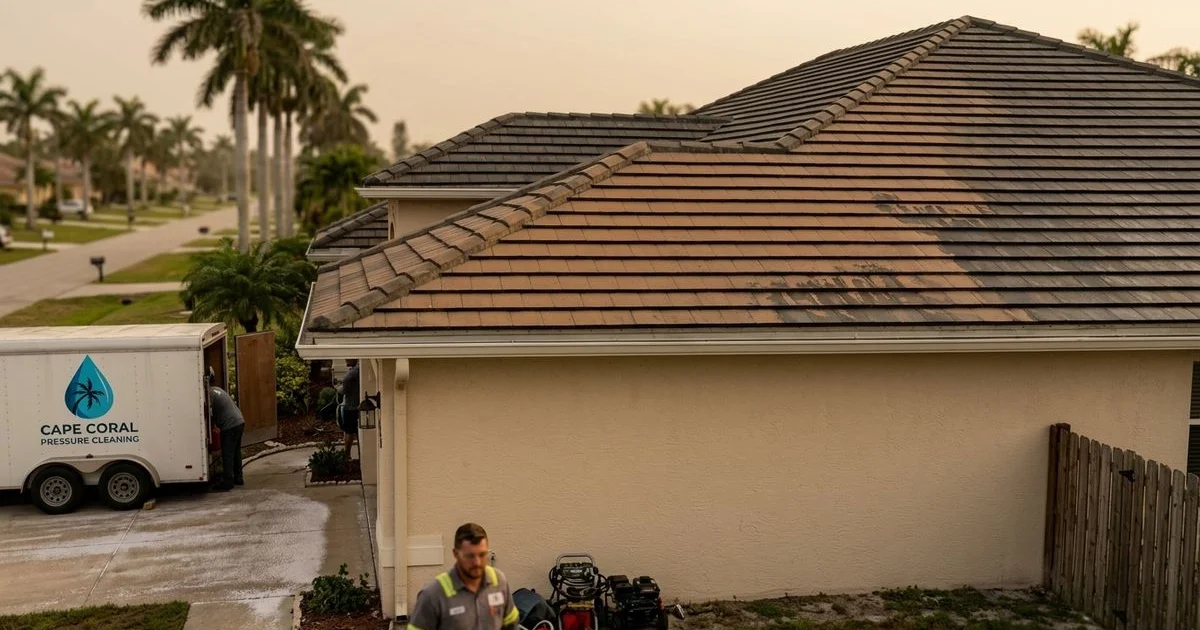
Our crews frequently bundle roof, solar, and house washing together because the dust settles everywhere simultaneously. Handling the entire property in a single visit reduces costs and ensures no abrasive particles wash down from a dirty roof onto a freshly cleaned driveway.
The Threat of Dust Cementation on Roofs and Solar
The Saharan Air Layer is a massive meteorological event. A 2025 tracking report from the National Oceanic and Atmospheric Administration highlighted that these plumes travel 5,000 miles from Africa and can span over 2,000 miles wide by the time they reach Florida.
This dry, particle-heavy air creates a specific hazard known as cementation. Morning dew mixes with the fine silt, effectively baking the dirt into a hard, crusty layer as the afternoon sun hits the surface.
A recent 2025 Stanford University analysis on solar panel efficiency found that neglecting to remove this cemented dust can slash energy production by up to 20 percent. Homeowners who wait for the rain to wash it away are often disappointed, as standard rainfall simply smears the dirt rather than removing it.
Common mistakes to avoid after a dust event include:
- Waiting months for a scheduled wash, allowing cementation to lock the dirt in.
- Hiring contractors who use high pressure on delicate solar panels.
- Ignoring the tracks where dust pools, leading to localized corrosion.
- Attempting DIY cleaning on steep, slippery tile roofs.
Why ARMA Guidelines Demand Soft Washing
Applying the wrong cleaning method costs significantly more in the long run. High-pressure washing acts like a sandblaster when mixed with abrasive dust, instantly voiding roof warranties, etching stucco, and blowing out screen panels.
We strictly follow the protocols set by the Asphalt Roofing Manufacturers Association. This authority explicitly prohibits high-pressure washing for shingle and tile roofs.
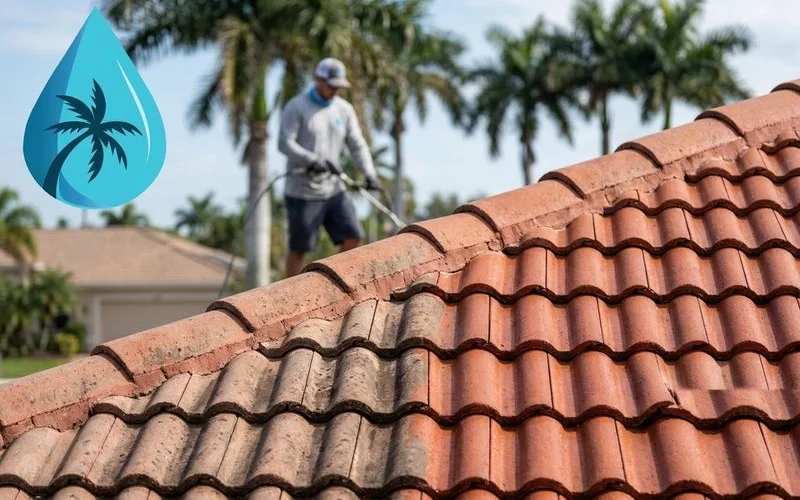
The approved method relies on soft washing, which uses a pressure level comparable to a standard garden hose (under 100 PSI). An EPA-compliant sodium hypochlorite solution does the heavy lifting, killing organic growth at the root without stripping away the UV-protective granules on your roofing material.
Here is a breakdown of what typical 2026 cleaning rates look like based on local Cape Coral data:
| Surface Type | Approved Cleaning Method | Average 2026 Cape Coral Cost |
|---|---|---|
| Asphalt Shingle Roof | Soft Wash Only (Under 100 PSI) | $0.15 - $0.20 per sq. ft. |
| Tile Roof | Soft Wash Only | $0.20 - $0.25 per sq. ft. |
| Solar Panels | Low-Pressure Deionized Water | Bundled or custom quote |
Our documentation process provides proof of warranty-aligned work on every job. SWFL conditions are simply unforgiving, and shortcut contractors will compound the damage by blasting dirt deeper into porous surfaces.
Local Context: Cape Coral & SWFL
Southwest Florida creates environmental conditions you do not see in most of the country, requiring a specialized approach to exterior maintenance. Sustained humidity above 70 percent, peak summer heat over 90 degrees, and salt-air corrosion shape the right approach to post-storm care.
A national franchise checklist will miss the nuances of these compounding factors. The wider industry sometimes calls this phenomenon african dust swfl, saharan air layer cleaning, or sahara dust roof maintenance, but the underlying mitigation strategy is exactly the same.
Battling Canal-Front Corrosion and HOA Compliance
For canal-front homes in Cape Coral, the combination of ocean-borne salt residue and Saharan silt creates a highly corrosive paste. This mixture accelerates oxidation on marine-grade aluminum pool cages and screen enclosures.
We have seen this chemical reaction eat through standard fasteners in a matter of months. Quick removal of the grit preserves the structural integrity of your outdoor living spaces and prevents the need for expensive rescreening down the line.
Property managers in HOA-managed communities like Sandoval and Pelican Preserve demand fast, documented mitigation to prevent permanent architectural damage to neighborhood exteriors.
Our localized plans adapt perfectly with the sustainability values found in eco-conscious areas like the Babcock Ranch solar-powered community. Eco-friendly runoff management ensures the local watershed remains uncontaminated.
Preventing Gloeocapsa Magma Breakouts
The reddish dust provides the exact mineral nutrients needed for aggressive organic growth. When this silt lands on a roof in the humid Florida climate, it feeds a specific strain of black algae called Gloeocapsa magma.
This algae creates those ugly, dark streaks you see spreading across local roofs. The organism literally eats the limestone filler inside asphalt shingles, deteriorating the material while trapping excess heat inside the attic space.
If you are ready to stop this cycle and schedule a maintenance visit, here are your next steps:
- Request a free quote: Same-day replies are standard, with zero pressure and no obligation.
- Explore more options: Browse our other guides for deeper coverage on protecting your exterior from harsh coastal weather.
- View direct pricing: Jump straight to our pressure washing services to see the full process for the underlying service.