Cape Coral Paver Cleaning & Sealing With Water-Based Urethane That Lasts
Two-stage clean-and-seal service for travertine, brick, and concrete pavers using polymeric sand and water-based urethane sealers that breathe through Florida humidity.
Paver Failures We Repair Across Cape Coral
Milky-White Sealer Failure
Solvent sealer trapped moisture under your pavers. We strip it, dry the surface, and reseal with breathable water-based urethane.
Weeds Growing Through Joints
Sand washed out years ago. We re-sand with polymeric sand that locks joints and starves weeds at the root.
Faded, Sun-Baked Color
SWFL UV bleaches unsealed travertine and brick. Deep cleaning plus a UV-resistant urethane restores tone for 2-3 years.
Cracked or Shifting Pavers
Loose joints let pavers move under vehicle weight. Re-sanding stabilizes the field before traffic damage spreads.
Paver Cleaning & Sealing in Cape Coral, FL
Have you noticed how brutal Florida humidity can be on your outdoor surfaces? When researching Paver Cleaning & Sealing in Cape Coral, you will quickly discover a very common, frustrating story. A homeowner sealed their beautiful driveway or pool deck a couple of years ago, and now it looks like someone painted it with spilled milk.
This frustrating issue is not a simple cleaning problem. The milky haze is actually a moisture-trap failure. It happens when a cheap solvent-based sealer locks our high subtropical humidity right under the surface.
Industry experts call this white haze “blushing” or “ghosting.” The good news is that this damage is entirely reversible. Our two-stage process strips the failed plastic film and reseals the stone with a water-based urethane that actually breathes.
Let us walk you through the exact steps to bring your faded patio back to life.
Our Clean-and-Seal Process
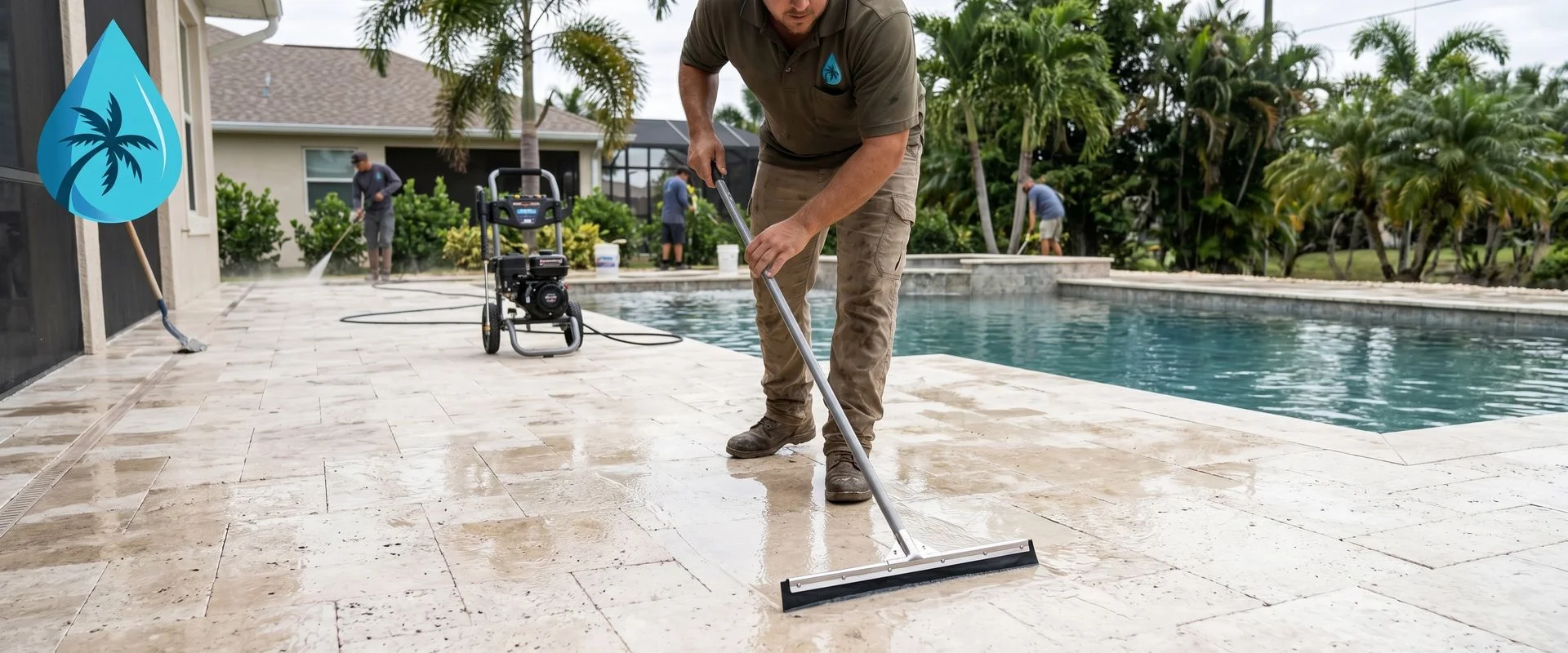
We start every job with a proven, structured method to protect your stone. This professional approach ensures an even, streak-free wash without the dreaded zebra stripes caused by standard wand cleaning. Our team executes the following core steps for every property:
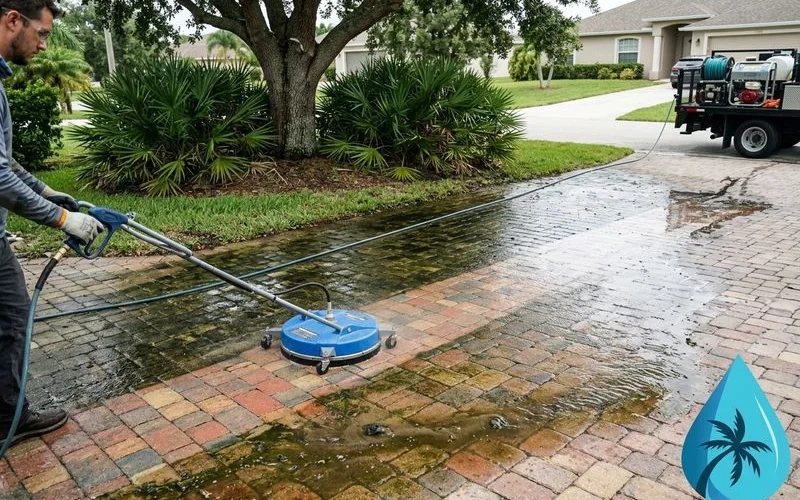
- Precision Surface Cleaning: We use a specialized rotary surface cleaner operating between 3,000 and 4,000 PSI. The equipment diffuses this high pressure across dual spinning nozzles to lift dirt safely.
- Targeted Stain Treatment: Stubborn oil and rust spots receive a dedicated pre-treatment before the main wash. Biological growth gets a soft-wash chemistry pass, while efflorescence is dissolved with a specialized acid treatment.
- Joint Stabilization: We always re-sand the joints because the heavy cleaning process naturally depletes the old material. This step is crucial because Cape Coral summer downpours can wash regular sand away like sugar. Our team sweeps in premium polymeric or silica sand. Once activated with water, this high-tech sand hardens to lock the pavers in place, prevent weed growth, and block ant nests.
- Flood-Coat Sealing: We finish the restoration by applying a two-component, water-based urethane sealer. This advanced formula is applied as a heavy flood coat that penetrates deeply into the joints. Our chosen sealer is highly moisture-permeable and UV-stable. It easily lasts two to three years in direct Southwest Florida sun exposure, leaving no milky white film or cloudy haze.
Paver Materials We Handle
We treat a wide variety of hardscape materials found throughout Southwest Florida. Each type of stone requires a unique approach to maintain its structural integrity. Our team carefully assesses your property to choose the perfect cleaning chemistry and pressure level. Here is exactly how the crew handles the most common materials in Cape Coral:
- Travertine: This softer, porous natural stone requires gentler chemistry and a highly breathable sealer to stay cool in the sun.
- Brick pavers: Highly durable and common across Cape Coral driveways, traditional brick easily accepts stronger sealers and higher washing pressure.
- Interlocking concrete pavers: The standard choice for local pool decks, these require premium polymeric sand to properly stabilize the engineered joints.
- Old or weathered pavers: Older installations benefit from a full restoration and a color-enhancement sealer to bring faded pigments back to life.
Sealer Failure Correction
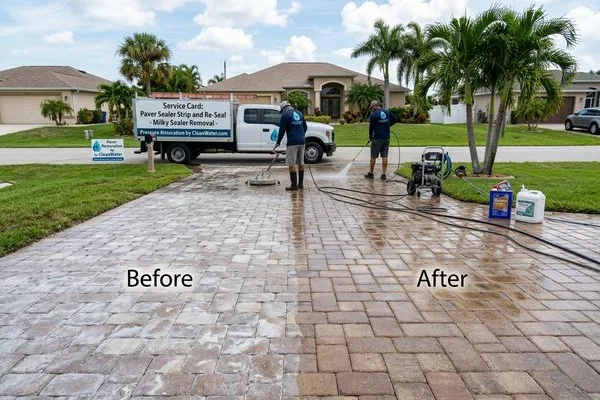
We see milky white, failing sealer on local properties almost every single day. This common problem requires a complete chemical stripping before any new product can be applied. Our crew safely dissolves the old solvent-based acrylic or xylene trapped on the surface.
The correction process typically takes one to two days, depending on the square footage. We restore the underlying surface, sweep in fresh sand, and apply the correct breathable product. The final result almost always looks better than the day the stones were first installed.
Many homeowners ask why their original sealer turned white in the first place. The answer always comes down to the chemical makeup of the product used. Our table below breaks down exactly why local contractors should avoid cheap solvents.
| Feature | Water-Based Urethane (Our Choice) | Solvent-Based Sealer (The Problem) |
|---|---|---|
| Moisture Control | Highly breathable; allows ground vapor to escape naturally. | Traps moisture under the surface, causing a white haze. |
| Visual Finish | Enhances natural color with a clean, clear, matte or satin look. | Creates a cheap, plastic-looking, overly glossy film. |
| Florida Durability | UV-stable and lasts 2 to 3 years without turning cloudy. | Fails quickly in high humidity and is prone to blistering. |
Many property managers prefer to tackle their entire property maintenance at once. We highly recommend pairing this paver work with a full pool deck and lanai cleaning. This bundled approach ensures your entire backyard hardscape moves on the exact same maintenance schedule. Our technicians can also handle your driveway and concrete cleaning during the same visit.
Tackling everything together saves you time and keeps your Florida home looking perfectly uniform. We provide free estimates for all residential and commercial Paver Cleaning & Sealing projects. Reach out today to schedule your professional service.
What's Included
- Surface-cleaner deep clean at 3,000–4,000 PSI
- Joint re-sanding with polymeric or silica sand
- Water-based urethane sealer (moisture-permeable)
- Sealer stripping & correction for milky-white failures
- Travertine, brick, and concrete paver coverage
- Flood-coat application + cure-time guidance
Why Choose Us for Paver Sealing
Water-Based Urethane Sealer
Moisture-permeable, no milky-white failure. Lasts 2-3 years in SWFL humidity.
Sealer Failure Correction
Specialists in stripping and replacing failed solvent-based sealers — common across SWFL.
Surface Cleaner Method
Even, streak-free cleaning. No zebra stripes from wand cleaning.
Travertine & Brick Specialists
Specific chemistry for each material — travertine, brick, and concrete pavers all handled correctly.
Our Process
Inspection & Quote
We walk the paver area, identify failed sealer, efflorescence, or biological growth, and quote per square foot.
Deep Clean
Surface cleaner at 3,000–4,000 PSI removes years of buildup. Failed sealer chemically stripped if needed.
Re-Sand Joints
Polymeric or silica sand swept into every joint. Activated to lock pavers and prevent weed growth.
Seal & Cure
Two-coat flood application of water-based urethane. Cure-time guidance provided so you know when foot and vehicle traffic can resume.
Fix Milky Pavers or Reseal Before SWFL Sun Sets In
Free same-day sq ft quote. Water-based urethane. Sealer-failure correction included if needed.
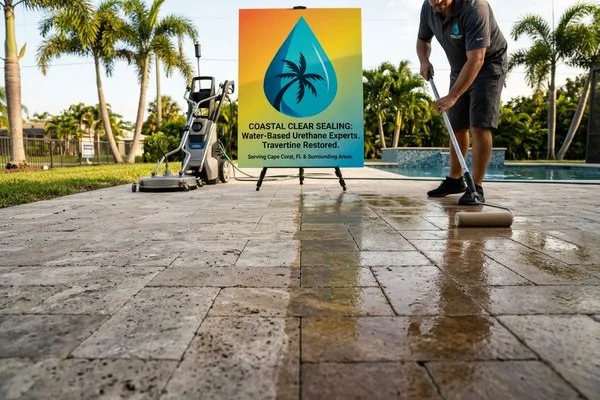
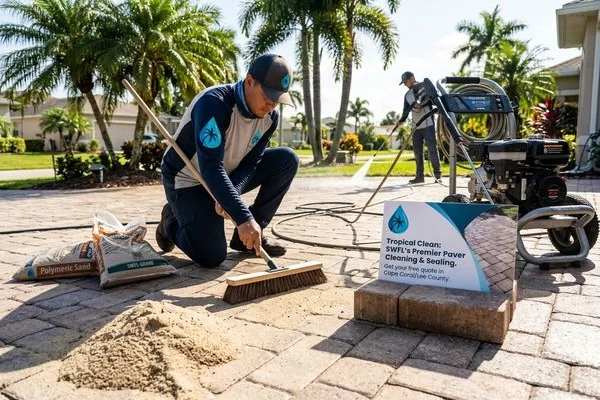
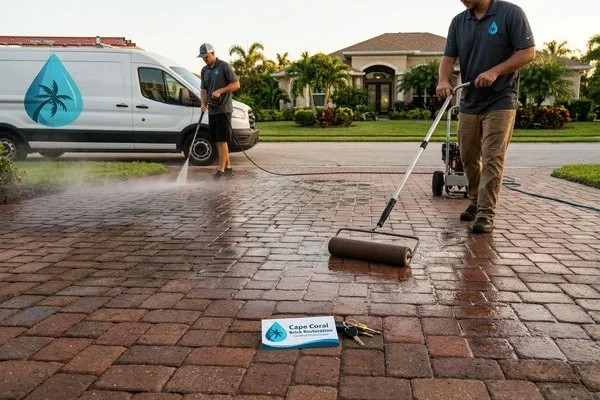
Recent Paver Sealing Work
What Customers Say About Our Paver Sealing
"Sealed our pavers two years ago with another contractor — they turned milky white. Cape Coral Pressure Washing stripped the bad sealer, re-sanded, and used a water-based urethane. Looks better than the day they were installed."
"Travertine pool deck restored with the right chemistry. No haze, no white film, no surprises."
"Brick paver driveway re-sanded and sealed. Two years in and still looks fresh."
Paver Sealing FAQs
My pavers turned milky white after sealing. Can you fix it?
What's the difference between water-based and solvent-based sealers?
How often do I need to reseal my pavers in Florida?
How long do I need to stay off newly sealed pavers?
Do you re-sand the joints, or just clean and seal?
Can you handle travertine differently than brick or concrete?
Related Services
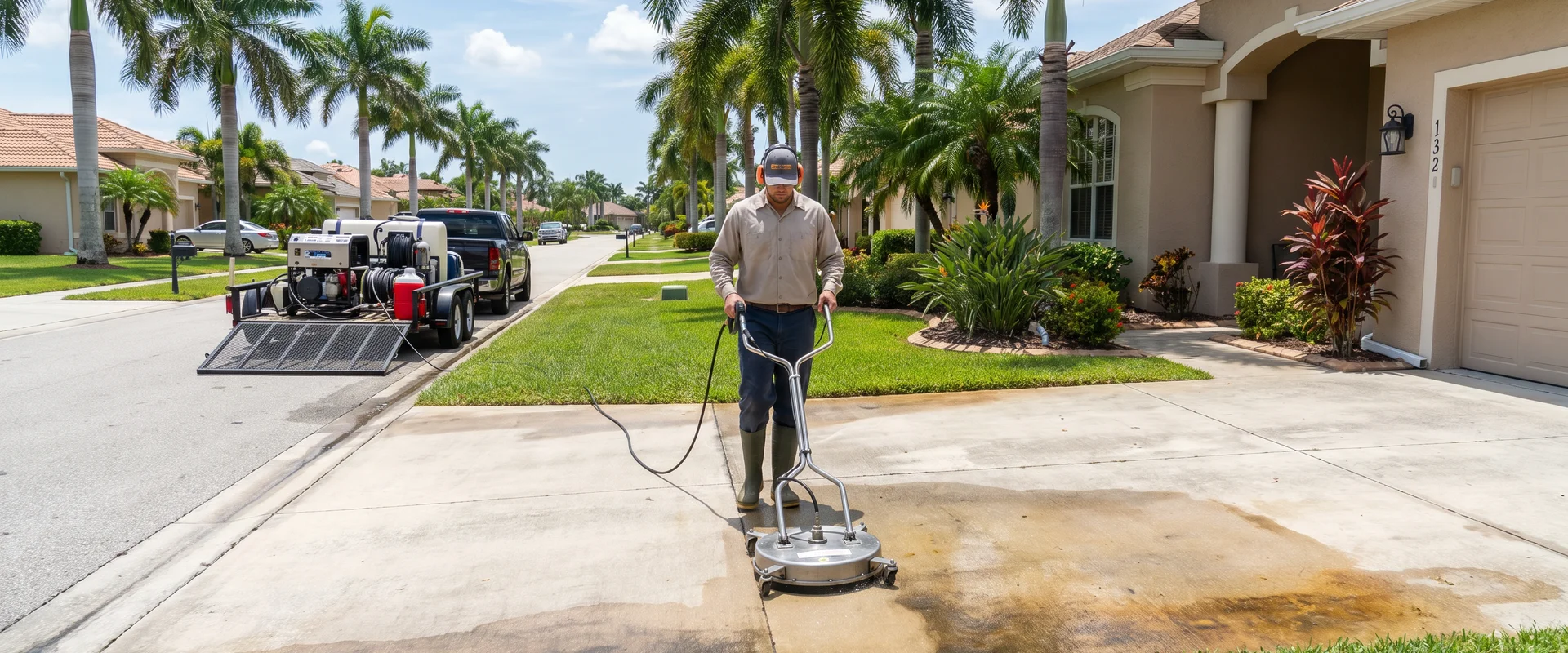
Driveway & Concrete Cleaning
Surface-cleaner pressure washing for driveways, sidewalks, walkways, and concrete patios — removes oil, rust, …
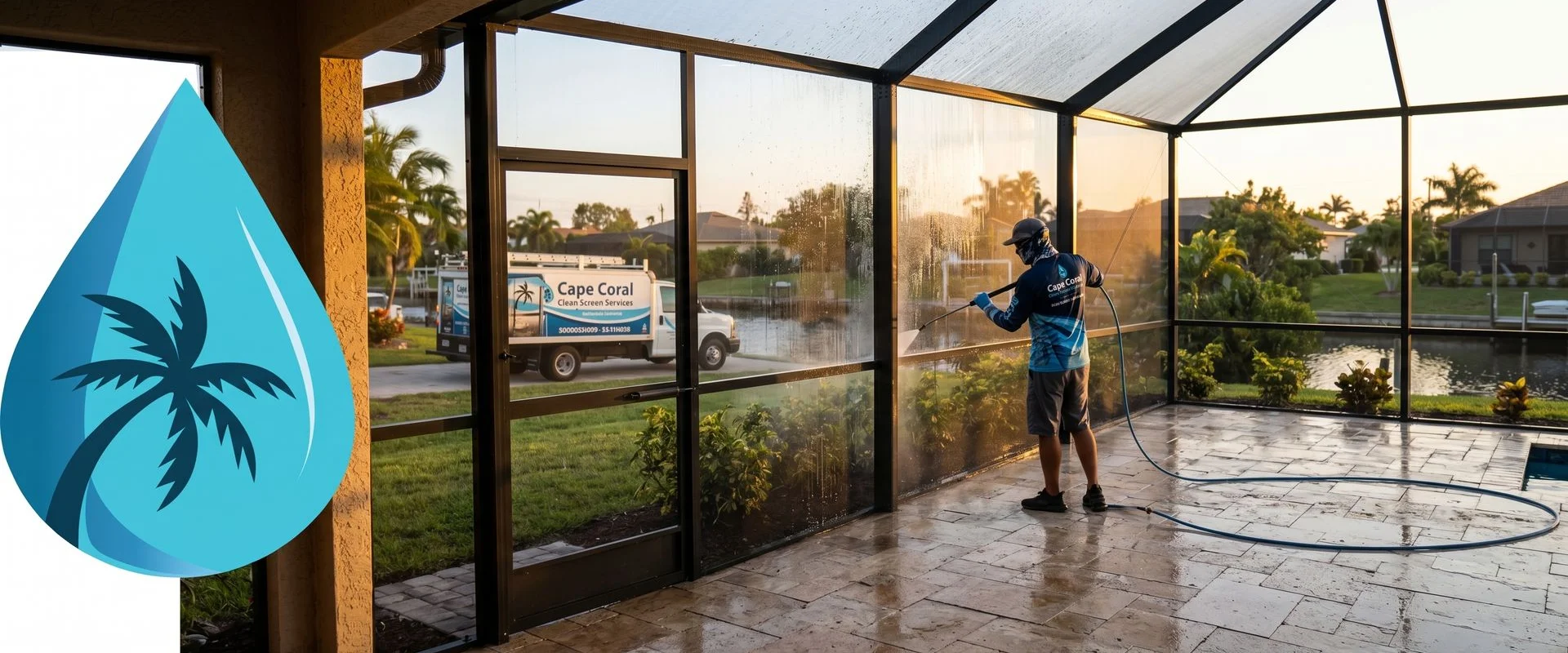
Pool Deck & Lanai Cleaning
Soft-wash cleaning of pool decks, pool cages, screen enclosures, and lanai frames — removes algae, mildew, and…
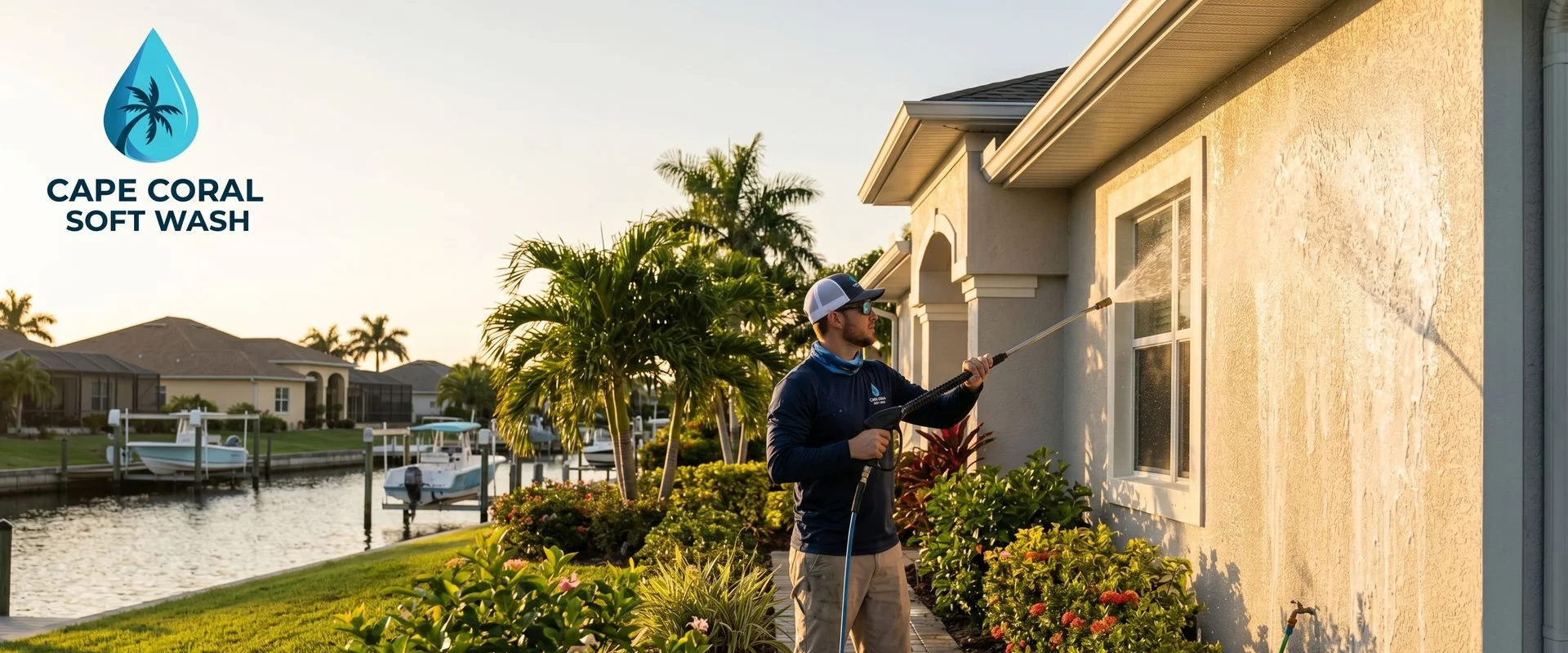
House Washing
Full exterior soft-wash for stucco, vinyl, fiber-cement, and painted siding — eco-safe chemistry that removes …
Paver Sealing Guides
In-depth answers, comparisons, and frequency guidance from our 20+ years on SWFL exteriors.
How Often to Reseal Pavers in Florida's Humidity
Florida humidity shortens paver sealer life to 2–3 years for high-sun surfaces. The signs of failing sealer and why proactive resealing saves money.
Travertine vs Concrete Paver Cleaning
Travertine demands pH-neutral chemistry and low pressure. Concrete pavers tolerate aggressive cleaning. Brick has its own needs. Here's how each is cleaned right.
Why Did My Sealed Pavers Turn Milky White?
Milky-white paver haze is moisture trapped under solvent sealer in SWFL humidity. Why pressure washing won't fix it — and what stripping and resealing does.
Paver Cleaning & Sealing Cost in Florida
Florida paver cleaning runs $0.50–$1.20/sq ft; clean-and-seal $1.50–$3.50/sq ft. See the 5 cost drivers and red flags in lowball quotes.
The Paver Sealing Process: What to Expect
Cape Coral paver clean and seal day by day — deep clean, dry, re-sand joints, flood-coat sealer, cure time. Walk-on and drive-on wait times explained.
Water-Based vs Solvent-Based Paver Sealers
Water-based urethane breathes through SWFL humidity; solvent sealers trap moisture and cause milky-white failures. Why we use water-based in Cape Coral.
Ready to Book Paver Sealing?
Free same-day quote. EPA-compliant chemistry. 100% satisfaction guaranteed.