Milky-White Sealed Pavers: The SWFL Moisture-Trap Problem (and the Fix)
Milky-white paver haze is moisture trapped under solvent sealer in SWFL humidity. Why pressure washing won't fix it — and what stripping and resealing does.
We know how frustrating it is to invest in property maintenance only to watch your expensive hardscaping turn into a cloudy, milky mess after the first summer storm.
That white haze is a classic reaction that plagues neighborhoods across the entire coastal region. From what field data shows, this specific failure separates standard contractors from those who truly understand local weather dynamics.
Our team has found that applying standard northern-state chemistry in a tropical zone guarantees failure. The actual science shows this happens because trapped water vapor cannot penetrate a rigid chemical film. Let us look at the data behind this chemical reaction and explore the exact stripping process required to restore a driveway or pool deck.
The Concern, Addressed
We consistently see sealed pavers turned white because standard solvent-based acrylic sealers trap ground moisture, preventing it from evaporating. This chemical reaction, known in the industry as moisture blush, creates a milky layer directly beneath the sealant film. A direct answer to this common problem requires completely stripping the compromised material and applying a breathable alternative.
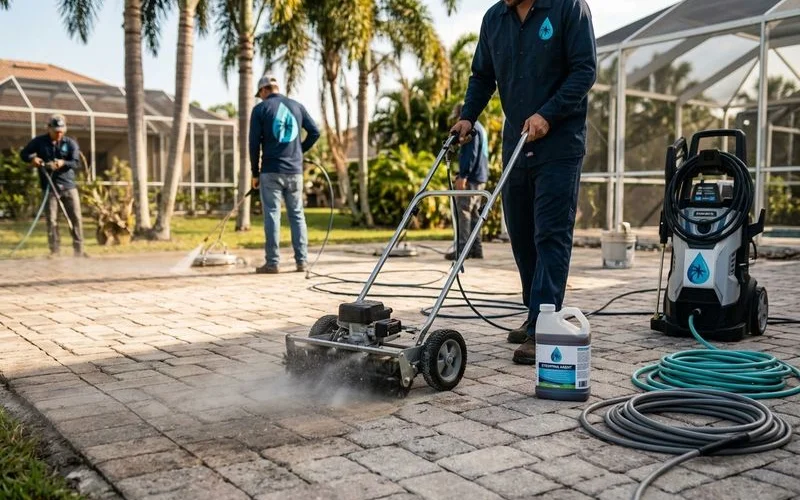
Our crews spend a significant portion of the year correcting these specific failures across Southwest Florida. The problem stems from the fact that local summer humidity regularly peaks between 87% and 100%. Non-breathable acrylics form an airtight plastic sheet over the porous stone, trapping the daily condensation and causing the white haze to form almost immediately after a heavy rain.
We often hear from property managers who mistakenly assume a high-pressure wash will clear the cloudiness away. Surface cleaning completely fails because the whitening sits under the top coat, requiring a chemical stripper to re-emulsify or break down the barrier. Heavy water pressure will only degrade the joint sand and etch the stone without fixing the actual cosmetic damage.
Our restoration method tackles the root cause by acknowledging three critical facts:
- Moisture blush is irreversible without stripping: The trapped water vapor alters the physical structure of the solvent layer.
- Pressure washing is ineffective: You cannot wash away a defect that is locked beneath an impermeable chemical barrier.
- Our field experience shows that climate dictates the chemistry: Southwest Florida requires porous, vapor-permeable solutions that allow daily condensation to escape.
Finding a permanent fix means shifting away from outdated products and moving toward climate-appropriate technology. Property owners seeking a complete breakdown of this correction process can review our paver cleaning & sealing guide. Our 20 years of local expertise proves that matching the chemistry to the environment is the only way to prevent a recurrence.
What Actually Matters
The most critical factor in resolving a paver whitening fix is using the correct removal chemicals and transitioning to a water-based urethane. A solvent-based system might look good for a few weeks, but it will inevitably fail when ground moisture attempts to rise. We handle this transition by applying advanced chemical strippers that require a specific 45 to 60-minute dwell time to dissolve the old acrylics.
Since methylene chloride was banned for consumer use, modern strippers rely on safer, EPA-compliant formulations that need more time to work. Rushing this dwell time leaves patches of old plastic behind, which will immediately ruin the new coat. Our protocol involves a complete breakdown of the existing barrier before introducing a modern, breathable finish.
Understanding the performance gap between these two options highlights why a milky paver sealer occurs. A side-by-side comparison reveals the clear advantages of upgrading your surface protection.
| Feature | Solvent-Based Acrylic (The Problem) | Water-Based Urethane (The Solution) |
|---|---|---|
| Breathability | Forms an airtight film, trapping moisture | Highly porous, allows water vapor to escape |
| Average Lifespan | 1 to 3 years before peeling or hazing | 3 to 5 years of durable protection |
| Humidity Reaction | Causes cloudy paver sealer (moisture blush) | Remains clear and structurally sound |
Our shift to water-based urethane completely eliminates the recurring nightmare of trapped humidity. The wrong application method costs significantly more in the long run, leading to etched stucco, blown-out screen panels, and dead landscaping. Southwest Florida conditions are unforgiving, and shortcut contractors frequently compound the damage by applying more solvent over a failing base.
We document our stripping and resealing method on every job so you have proof of warranty-aligned work. Following guidelines from the Asphalt Roofing Manufacturers Association (ARMA) ensures that soft wash chemicals do not void your roof warranties during the cleaning phase. This comprehensive documentation gives property managers peace of mind and a clear record of proper maintenance.
Local Context: Cape Coral & SWFL
We customize our hardscape restoration strictly to the environmental demands of the Southwest Florida region. This area creates conditions you do not see in most of the country, including sustained humidity above 70% and peak summer heat over 90 degrees Fahrenheit. Salt-air corrosion along the coast, Saharan Air Layer dust events from June through August, and hurricane recovery work all dictate a specialized approach.
Our specialized approach addresses cloudy paver sealer in ways a generic national franchise checklist simply will not capture. Canal-front homes in Cape Coral face aggressive salt residue that accelerates corrosion on screen frames and outdoor metal fixtures. These specific coastal factors require a targeted chemical mix to neutralize the salt before any new topcoat goes down.
We adapt our paperwork and processes to meet the strict Architectural Review Board (ARB) documentation requirements for HOA-managed communities like Sandoval and Pelican Preserve. For the solar-powered community of Babcock Ranch, the cleaning products must align strictly with their high sustainability values. Using an EPA-compliant, water-based stripper satisfies those environmental mandates while still delivering a flawless aesthetic.
Our local knowledge allows us to anticipate the unique hurdles that each neighborhood presents:
- Coastal Salt Intrusion: Canal properties need specialized pre-treatments to stop salt from degrading the new urethane bond.
- High-Temperature Curing: Summer surface temperatures can exceed 130 degrees, requiring specific hydration tactics to prevent flash-drying.
- Our scheduling team closely monitors Saharan Dust Events: We pause applications during heavy dust weeks to prevent debris from settling into the wet finish.
- HOA Compliance: Supplying full chemical safety data sheets ensures fast approval from community management boards.
- Hurricane Recovery: Post-storm cleanups require deep decontamination before any cosmetic work begins.
We encourage property owners to request a free quote for immediate, no-obligation pricing and a same-day reply. For deeper coverage on related maintenance topics, browse our other guides to build a complete property care plan.
Taking action now prevents permanent etching and structural damage to your expensive exterior stone.
Our primary goal is to help you secure a durable, beautiful finish that survives the harshest coastal summers. A properly sealed driveway or pool deck enhances your curb appeal and protects your underlying investment. Start by assessing your current surface, and reach out when you are ready for a permanent solution.