Paver Resealing Frequency in Cape Coral: Every 2–3 Years
Florida humidity shortens paver sealer life to 2–3 years for high-sun surfaces. The signs of failing sealer and why proactive resealing saves money.
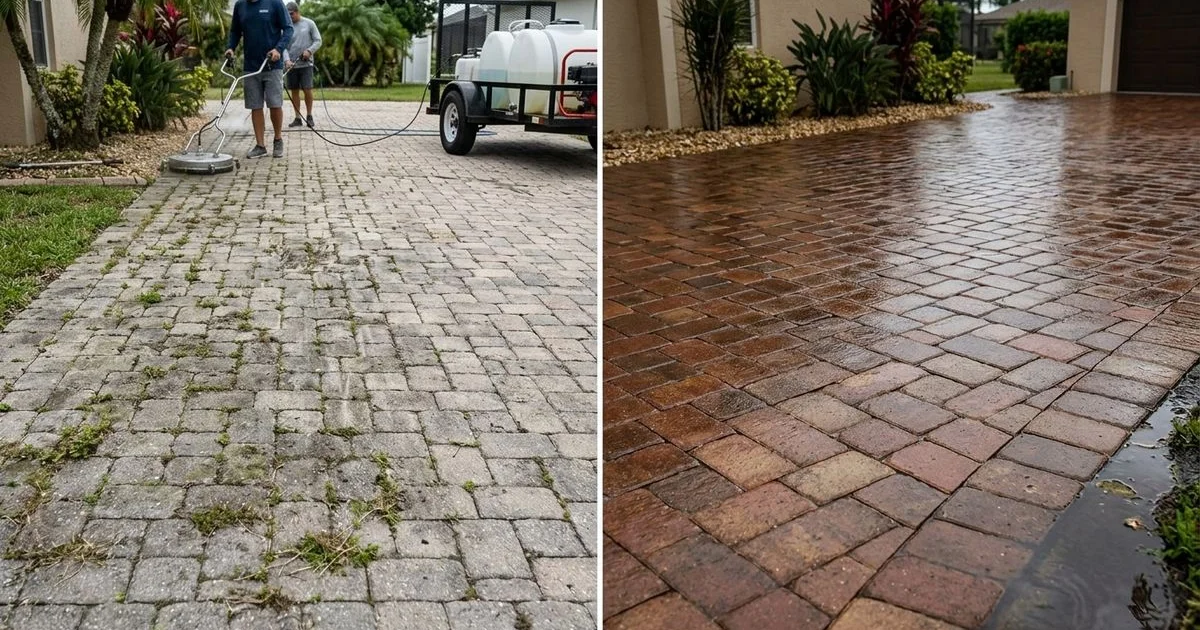
We hear the exact same frustration from property managers and homeowners every spring when the intense Florida sun hits their driveways. That initial rich color has faded into a chalky mess, and the joint sand is washing out after a few heavy afternoon storms.
This rapid wear is a common reality when dealing with a UV index of 10 or higher and an average of 53 inches of annual rainfall. Our focus here is to break down exactly how often to reseal pavers florida properties need protective maintenance to stay intact.
Let’s look at the data, what it actually tells us about paver degradation, and then walk through a practical plan to stop it.
How Often to Reseal Pavers Florida, At a Glance
If you are searching about the correct timeline in Cape Coral or the wider Southwest Florida area, the short answer is every 2 to 3 years. High-traffic driveways and unprotected pool decks often need a topcoat closer to the 18 to 24-month mark due to extreme sun exposure.
Our team has spent over 20 years handling these exact timelines across Cape Coral, Fort Myers, Naples, Bonita Springs, and Babcock Ranch. The intense summer heat bakes unprotected concrete, leading to dull finishes and water absorption.
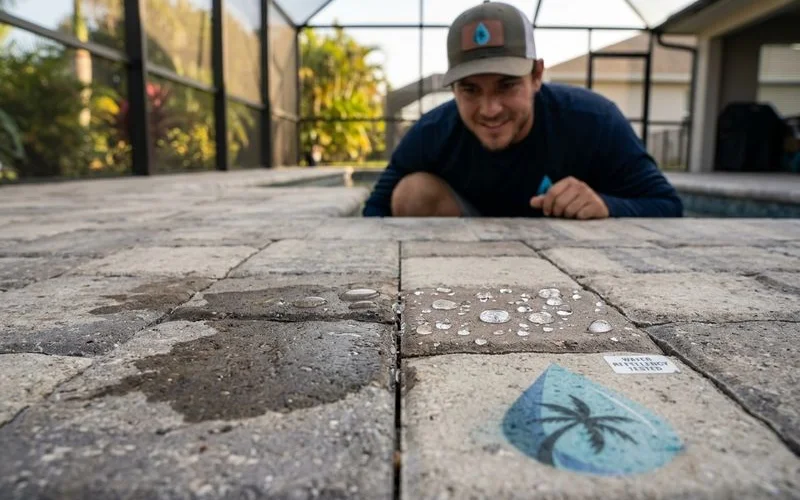
You can clearly see the difference in water bead retention when the right chemistry is applied. Our recommendation is always to act before the surface starts actively holding water.
When in doubt, jump to our paver cleaning & sealing guide to see how proactive maintenance fits into a broader property care routine. Several clear signs indicate a reseal is due:
- Faded or dull surface coloring
- Joint sand washing out after rainstorms
- Persistent weed growth in the gaps
- White, chalky efflorescence trapping moisture
The Cost of Waiting Too Long
We often see homeowners wait four or five years, completely voiding the protective barrier. This delay allows the 53 inches of annual Cape Coral rainfall to erode the foundation and shift the brickwork.
A proactive approach saves significant money compared to the labor-intensive stripping required for neglected driveways.
The Right Schedule for SWFL
The right paver resealing schedule for SWFL depends almost entirely on your property’s daily sun exposure and water drainage. Shaded lanai sections can last 4 to 5 years, while a southern-facing driveway demands attention every 2 years.
Our technicians document the exact method used on every job so you have proof of warranty-aligned work. Using the wrong products, like cheap solvent-based sealers, traps the coastal humidity and creates a cloudy white haze.
This mistake eventually requires expensive chemical stripping to fix. We strongly advise using a breathable, EPA-compliant, water-based joint stabilizing sealer to handle the unique local climate.
| Exposure Type | Typical Reseal Timeline | Primary Threat |
|---|---|---|
| Full Sun Driveways | 18 to 24 Months | UV Fading & Hot Tire Pickup |
| Saltwater Pool Decks | 18 to 24 Months | Chlorine & Salt Corrosion |
| Shaded Walkways | 3 to 4 Years | Algae & Mildew Growth |
| Covered Lanais | 4 to 5 Years | General Wear & Tear |
Why Recurring Service Is Lighter
Regular maintenance simply locks in the existing ASTM-C144 angular joint sand and refreshes the UV protection. This ARMA-aligned soft wash approach protects your roof warranties, preserves delicate stucco, and keeps your landscaping safe.
We structured our recurring service to focus on lighter, more affordable topcoats rather than starting from scratch.
Local Context: Cape Coral & SWFL
Southwest Florida creates specific weathering conditions that dictate when to reseal pavers, far beyond what a national franchise checklist covers. Sustained humidity above 70%, peak summer heat over 90°F, and salt-air corrosion completely change how protective coatings behave.
Our specific approach addresses the unique hazards found across different local neighborhoods. Canal-front homes in Cape Coral face accelerated salt residue buildup that corrodes outdoor metal and degrades joint sand.
HOA-managed communities like Sandoval and Pelican Preserve require strict ARB documentation before any heavy maintenance begins. We also see solar-powered communities like Babcock Ranch demand environmentally friendly cleaning agents that align with their sustainability values.
Sand Stabilization and The Rainy Season
Cape Coral experiences intense afternoon downpours that easily wash out unsecured gaps, leading to shifted bricks and major weed problems. Applying a premium 2-part water-based sealer effectively glues that sand in place.
We always stress the importance of securing your joint sand before the heavy summer rains arrive. This simple paver resealing schedule swfl adjustment provides several direct benefits:
- Stops erosion dead in its tracks
- Prevents ant hills from forming in the joints
- Blocks deep-rooted weed growth
- Maintains the structural integrity of the driveway
Knowing how often to reseal pavers florida homes require is the easiest way to get ahead of the harsh coastal elements and extend the lifespan of your hardscaping. Getting proactive maintenance stops the damage before it starts.
Our team is ready to evaluate your specific surface and provide a custom recommendation.
If you are ready to schedule, request a free quote for a same-day reply with no pressure.
For deeper coverage on related topics, browse our other guides to see our full library. We also encourage you to jump straight to our paver cleaning & sealing page to check current pricing and view the underlying service process.