How to Identify and Clean Vinyl, Stucco, and Hardie Board Siding
Identify your siding type and learn the right cleaning method — pressure tolerance, chemistry, and painted vs unpainted considerations.
mdx
The Short Answer
We frequently see property managers misidentify exterior materials, which quickly turns a routine wash into a massive repair bill.
That initial assessment is actually the most critical step for protecting a home.
Our team has spent over 20 years handling vinyl vs stucco vs hardie cleaning across Cape Coral, Fort Myers, Naples, Bonita Springs, Estero, Punta Gorda, Sanibel, Captiva, and Babcock Ranch.
This guide answers your questions directly and helps you identify your siding type before applying a single drop of water.
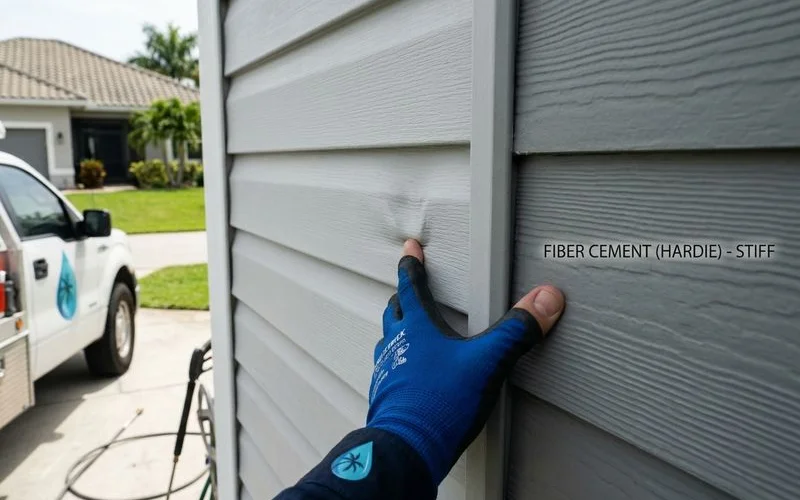
We use a specific, proven framework to match the cleaning method to the exact surface. Here is what you need to evaluate before starting:
- Visual identification guide for vinyl, stucco, and fiber-cement (Hardie board)
- Safe pressure tolerance limits (PSI) for each specific material
- Chemistry differences to apply (acid vs neutral vs alkaline solutions)
Our advice matches how we actually operate in the field with EPA-compliant chemistry and ARMA-aligned soft washing. When in doubt about the process, jump straight to our house washing page to see how this fits into a complete exterior maintenance plan.
Comparing Your Options
We find that most homeowners ask the exact same questions when researching the best way to maintain their exteriors. The wrong technique costs more in the long run through voided warranties, etched surfaces, or dead landscaping.
Our approach focuses on preventing damage while eliminating the underlying organic growth. You must consider a few key factors for every project:
- Painted versus unpainted surface considerations
- Raw bleach damage on oxidized vinyl siding
- Acid etching risks on aluminum window trim
- Manufacturer warranty pressure limits
We document our specific cleaning method on every single job so you have proof of warranty-aligned work. This guarantees you receive EPA-compliant chemistry and the safest approach for your specific property.
Vinyl Siding Cleaning Limits
We highly recommend keeping water pressure between 1,500 and 2,000 PSI when working on vinyl exteriors. High-pressure blasts easily force water behind the overlapping panels, which traps moisture and breeds hidden mold.
Our technicians frequently encounter vinyl that has been chalked or oxidized by previous contractors using raw, unmixed bleach. A highly concentrated sodium hypochlorite mix breaks down the plasticizers in the vinyl over time.
Stucco Pressure Tolerances
We treat stucco as one of the most fragile exterior surfaces in Southwest Florida. Industry standards dictate using under 500 PSI for stucco to avoid blasting away the textured finish coat.
Our specialized soft wash system uses low pressure combined with a dedicated cleaning agent to dissolve algae without force. Applying 3,000 PSI from a standard rental power washer easily widens existing hairline cracks and drives water straight into the home framing.
James Hardie Board Requirements
We strictly follow the James Hardie manufacturer guidelines to protect your 30-year limited warranty. The official James Hardie maintenance bulletin clearly states that pressure must remain below 1,500 PSI.
Our crew always uses a wide fan tip nozzle and maintains a distance of at least six feet from the fiber cement surface. Scrubbing fiber cement with stiff brushes or harsh chemicals strips the ColorPlus finish, leaving the porous material exposed to the elements.
Local Context: Cape Coral & SWFL
We adapt our cleaning chemistry to combat the extreme environmental conditions specific to Southwest Florida. Recent 2026 climate data confirms the region averages 54 inches of annual rainfall and sustains a relative humidity above 74 percent for most of the year.
Our methods account for peak summer heat over 90 degrees, coastal salt-air corrosion, and heavy Saharan Air Layer dust events from June through August. These intense weather factors create the perfect breeding ground for aggressive green algae and black mold on shaded walls.
Adapting to Specific Community Needs
We routinely customize our approach because a national franchise checklist simply fails in this unique climate. Canal-front homes in Cape Coral face rapid salt residue buildup that accelerates corrosion on screen enclosures and outdoor metal fixtures.
Our team provides comprehensive Architectural Review Board (ARB) documentation for HOA-managed communities like Sandoval and Pelican Preserve. This paperwork proves that the property receives a compliant, warranty-safe treatment.
Securing Your Exterior Maintenance
We customize the wash process to align with sustainability values at eco-conscious communities like Babcock Ranch. Other contractors often refer to this process as siding cleaning by material or identify siding type, but the underlying methodology remains identical.
Our office provides free, same-day quotes with absolutely no high-pressure sales tactics. For deeper coverage on related property care topics, browse our other guides.
We invite you to jump straight to our house washing page to review the pricing and process for the underlying service.